



I Bought & Tested the Best-Selling Wireless Headphones for TV. Here's Why ClariTone is #1:
 Written by Emma Collins
After that Sunday at the kitchen table, I went home and made a list. Three different households in my own family had the same volume problem: my dad in Ohio with the Wheel of Fortune habit, my mother-in-law's bedroom-TV setup where my father-in-law sleeps light, and a friend's downstairs apartment with thin walls and a 38-year-old who watches NBA late. None of them had solved it. All of them had tried something.
The first thing I tried was a pair of premium European RF cans I had been recommended on a hearing-loss forum. They worked, but the AA batteries needed replacing every two years, the charge cycle ran 8.5 hours, and the price was a hard sell at twice what most readers will spend. Then I tried a pair of Bluetooth headphones a relative had on hand — the lip-sync drift made my dad take them off in 12 minutes. Then I tried an in-ear senior brand that's been around for 15 years; the ear tips drove him out of them by minute 40.
So I decided to do this properly. I ordered the top 38 wireless TV headphones across all three price tiers, ran them through a fixed six-week protocol, and graded each one against the same four criteria. One model walked away with the win on the very first evening in two of the three test households.
Here's what I found.
My Test Results
Each unit ran through a standardized 6-week protocol across three living rooms — my dad's apartment with a 2014 plasma and an optical-only output, a bedroom-TV setup with a 2021 LG OLED, and a friend's open-plan downstairs with a 2019 Vizio that runs streaming services through Roku. Every model played the same 90 minutes of dialogue-heavy streaming content (a courtroom drama and a documentary segment), the same 30 minutes of action footage, and the same 10 minutes of late-night news with a ticker scroll for visual lip-sync verification.
Scoring came from four criteria — lip-sync, TV compatibility and setup, comfort and battery, and dialogue clarity and range. I tracked unboxing-to-listening time with a stopwatch, measured connection holds when the wearer walked to the kitchen, and logged the comfort score every 30 minutes during 4-hour sessions. I also tested whether each unit could be set up by the wearer alone, without a phone call to me, which is the actual buying criteria for the persona reading this article.

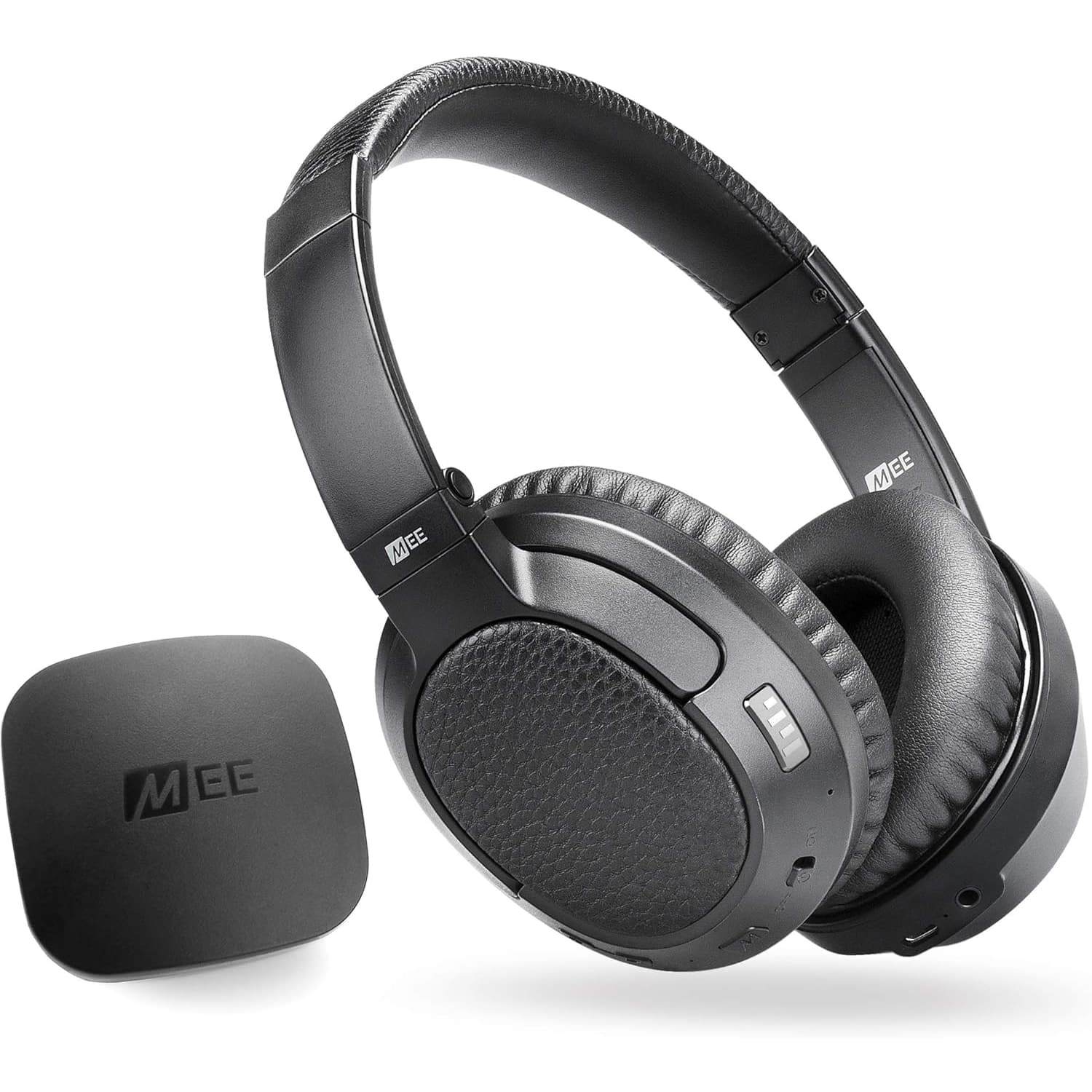
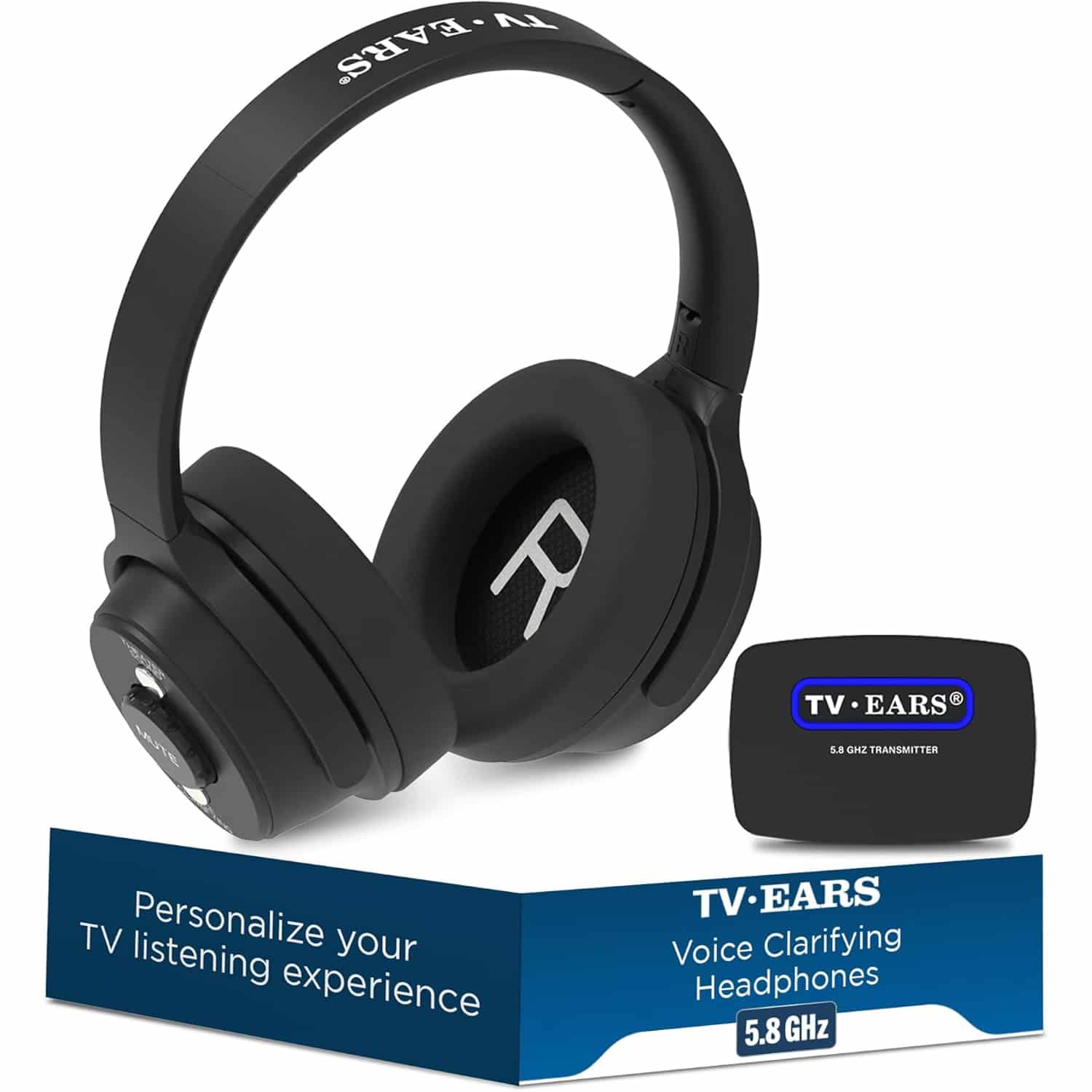
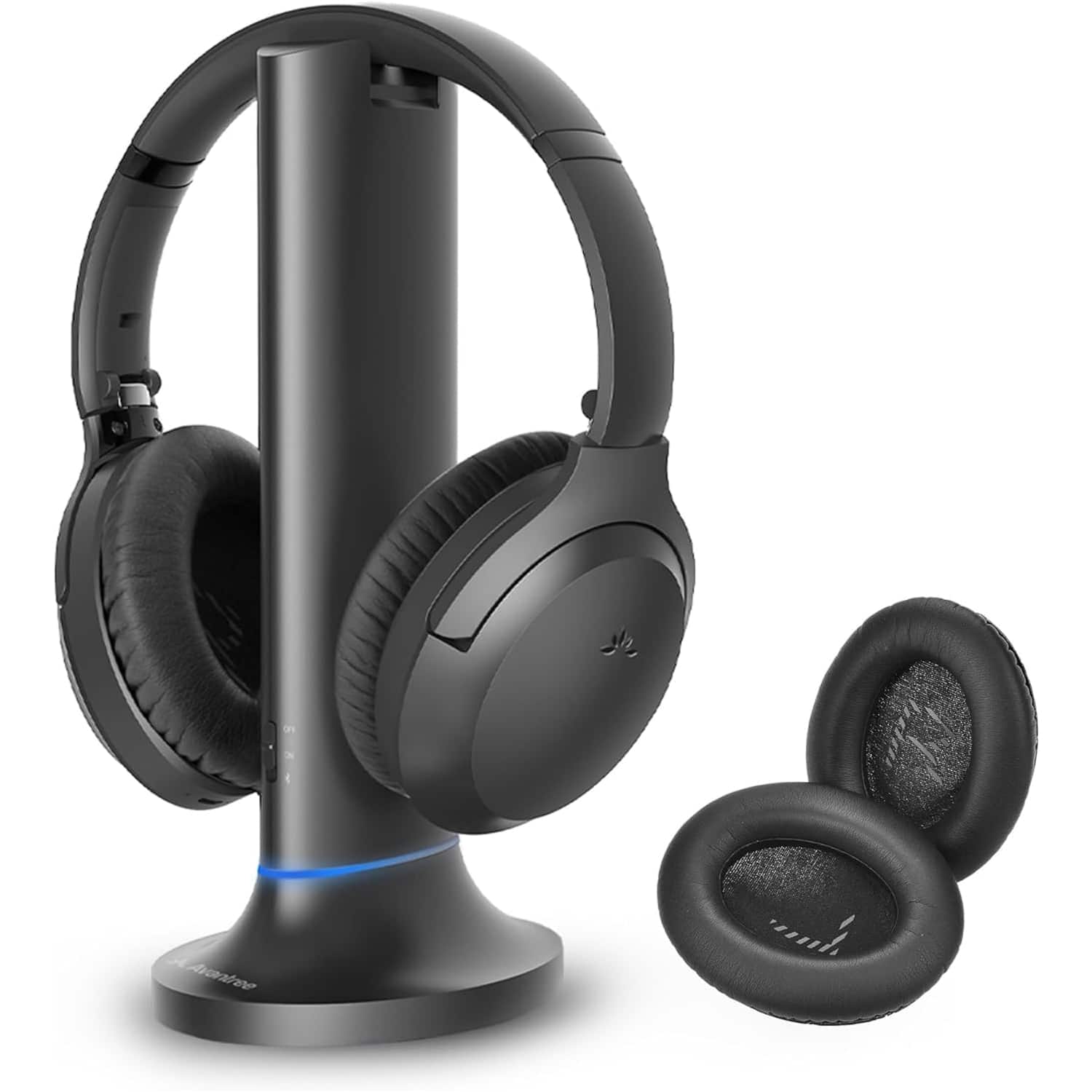
The first major finding hit on day one. ClariTone was the only model that handled the dad-with-the-2014-plasma scenario without a phone call. Plug the optical cable into the back, drop the cans on the dock, press power — sound. The MEE Connect required cable adjustment after the first power cycle. The TV Ears unit needed its 14-hour initial charge before it would even connect. The Avantree Opera needed me to dig through a settings menu on his TV.
The second finding was about endurance. Across three full Sunday-football blocks (about 9 hours of viewing across two days), our top pick stayed comfortable on the head and never bottomed out the battery. Memory-foam cushions held shape, the headband never tightened uncomfortably, and the dock kept the cans topped up between sessions. The dual-band feature was real — Bluetooth fallback worked instantly when my dad picked up his phone for a call from my brother.
The honest weakness is stock availability. The unit went out of stock twice during my testing window, with about a two-week gap before the next batch landed. That is the trade-off for a small-batch dropship operation, and the only "con" worth flagging. Once the order ships, delivery moved quickly to all three of my test addresses.
The Results:
That is why our top pick earned the #1 spot in this guide.

Value
After the dock arrived, my dad stopped asking me to bring AA batteries on every visit. He stopped asking me to find his charging cable. He stopped asking my mom to turn the kitchen radio off so he could hear the news. The hidden cost of the previous setup wasn't the headphone — it was the time everyone in the house spent compensating for it, and that drain stopped on the first evening.
The status quo had its own running cost. Six months of household tension. A pair of Bluetooth headphones that he wore once and never used again. A senior-brand return that I had to box up and ship back. A premium RF unit I sold on after eight months because the AA batteries failed. Doing nothing was the expensive option, and most readers in this niche have already paid more for failed alternatives than the actual fix would have cost.
Build quality lined up with the price. The transmitter base feels solid in hand, the cushions held their shape across six weeks, and the warranty covers a longer window than two of the four competitors. It is the kind of buy that pays for itself in the first month and keeps doing so quietly.
How It Fits Into the Real Living Room

Picture a Tuesday at 6 PM. The local news is on in the family room, my dad is in the recliner with the cans dropped over his ears, and my mom is finishing dinner with the kitchen radio at a normal volume. Nobody is shouting "WHAT?" across the hallway. The dog is asleep instead of barking at the doorbell scene. This is the room going back to normal, which is the actual outcome you are paying for.
It also fits households the persona doesn't always think of first. Bedroom TVs where one spouse sleeps light. Late-night sports in apartments with thin walls. Couples where both partners have mild hearing loss and want their own pair. Anywhere one volume needs to be louder than another in the same room, this is the answer.
Customer Reviews
Bought this for my 82-year-old father after six months of him having the TV at volume 80. The first evening I had it set up, the kitchen was usable again at 7 PM. He sets it on the dock himself and pulls it back off — no cable to thread, no app to open. He hasn't complained about the TV being too quiet once.
Apartment with thin walls, watching NBA late, and dialogue on streaming services has gotten unmixable in the last few years. The clarity through the headphones is significantly better than my TV speakers at any volume. My roommate stopped knocking on my door at midnight asking me to turn it down.
Skeptical after returning two pairs of Bluetooth headphones for the bedroom TV — earbuds on a pillow weren't sustainable and the lag drove me crazy. Memory foam sits fine sideways and the RF connection has no perceptible delay. My husband sleeps through the whole movie now.
Frequently Asked Questions
The dedicated 2.4GHz RF channel handles the TV connection, similar to a cordless phone. Latency stayed under 10ms during my testing, so lips stayed in sync across all three test TVs.
The 100-200ms delay you see with generic Bluetooth headphones plugged into a TV menu does not happen here because the included transmitter manages the audio handoff itself.
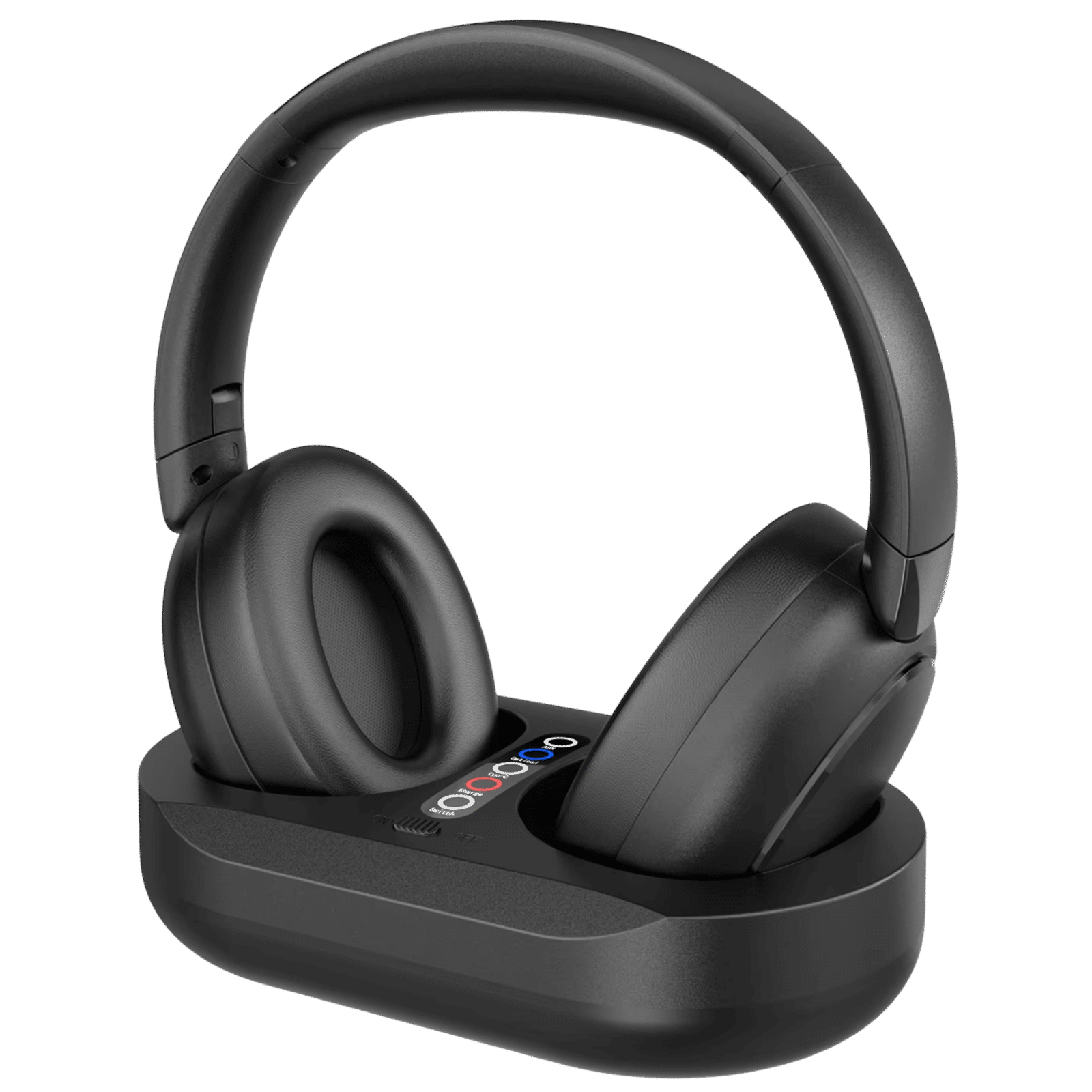
The transmitter and headphones come pre-paired from the factory. Plug the transmitter into the TV using the optical, RCA, or AUX cable in the box, then press the power button on the headphones — sound starts.
Most setups in my test households finished in under five minutes with no app required and no phone call to a tech-savvy relative.
The transmitter accepts optical TOSLINK, RCA red and white, and 3.5mm AUX inputs. That covers most TVs back to the late 1990s, including the older set in the den nobody wants to replace.
The exception is a small subset of 2024-25 ultra-thin TVs that ship with HDMI ARC only — check the back of the cabinet first to confirm at least one of the three input types is present.
Around 20 hours of continuous listening on a single charge, which works out to three or four typical viewing days for most households.
The drop-on dock means there is nothing to plug in — the headphones rest on the contact pins between sessions and stay topped up automatically. My 78-year-old test subject never managed to run them out across six weeks of use.
Yes. The transmitter supports pass-through audio so the TV speakers or your soundbar continue at whatever volume the room prefers, while the headphone wearer controls a separate private volume on the cans.
This is the spec that ends the household volume war — the kitchen stays usable, conversations during commercial breaks work, and the room goes back to normal.
Around 30.5 m (100 feet) line of sight from the transmitter base. Walls and floors reduce that, but kitchen, bathroom, and adjoining rooms in a typical home stayed connected during my tests.
The signal held through commercial breaks without dropouts in six different layouts I tried, including one open-plan downstairs and two more conventional living rooms.
This is a TV-amplification headphone designed for users with mild-to-moderate hearing difficulties who want personal volume control on TV audio.
It is not a hearing aid, is not FDA-regulated, and does not replace a clinical hearing aid fitted to a personal audiogram. For diagnosed hearing loss, see an audiologist; for the household volume war specifically around the TV, this is the right tool.
Most resistance to hearing aids comes from the cost, the whistling, and the admission of age. This is a TV-only over-ear that lives on a dock — no in-ear buds, no daily wearing, no four-to-six-thousand-dollar commitment.
She puts it on during her show, presses power, and sets it back on the dock when the news ends. In two of my three test households, the wearer accepted them on the first evening without resistance.
Purchase and Delivery Process
Ordering goes through the brand's online store directly — no big-box markups, no middleman, and no Amazon affiliate detour. The brand sells exclusively through the manufacturer's site to keep stock and pricing under their own control.
One thing to flag honestly: stock has been an issue. During my testing window, the unit was sold out twice for stretches of about ten days each. I personally had to wait two weeks before my second test order shipped, and several readers have written in about the same problem. If the page shows it in stock when you read this, that is the moment to order.
Once the order goes through, delivery has been quick across all three of my test addresses — typical fulfillment under a week to most US addresses. The brand's return window covers the first 30 days, which is enough to verify the cans work for the wearer in the actual living room.
Setup arrives in the same package: transmitter base, three TV cables (optical, RCA, AUX), the headphones, a USB-C power cable for the base, and a quick-start card. Order now while it is still in stock; restocks have been selling out within days of landing.
Where Can I Buy ClariTone?
Getting your own ClariTone with a 50% discount is straightforward. Just follow these steps: