


I Bought & Tested the Best-Selling Portable Car Battery Chargers. Here's Why AmpForge is #1:
 Written by Jake Thornton
After that dead-Goldwing morning in April, I drove straight to the auto-parts counter and bought a replacement charger off the shelf — a popular brand with the proprietary connector. I plugged it in and tried to also use it on my F-150's flooded battery, only to realize the SAE pigtail I already had on the truck didn't fit. The clerk handed me an adapter and a knowing shrug — about half the cost of the charger itself. That was the moment I decided to actually do this right.
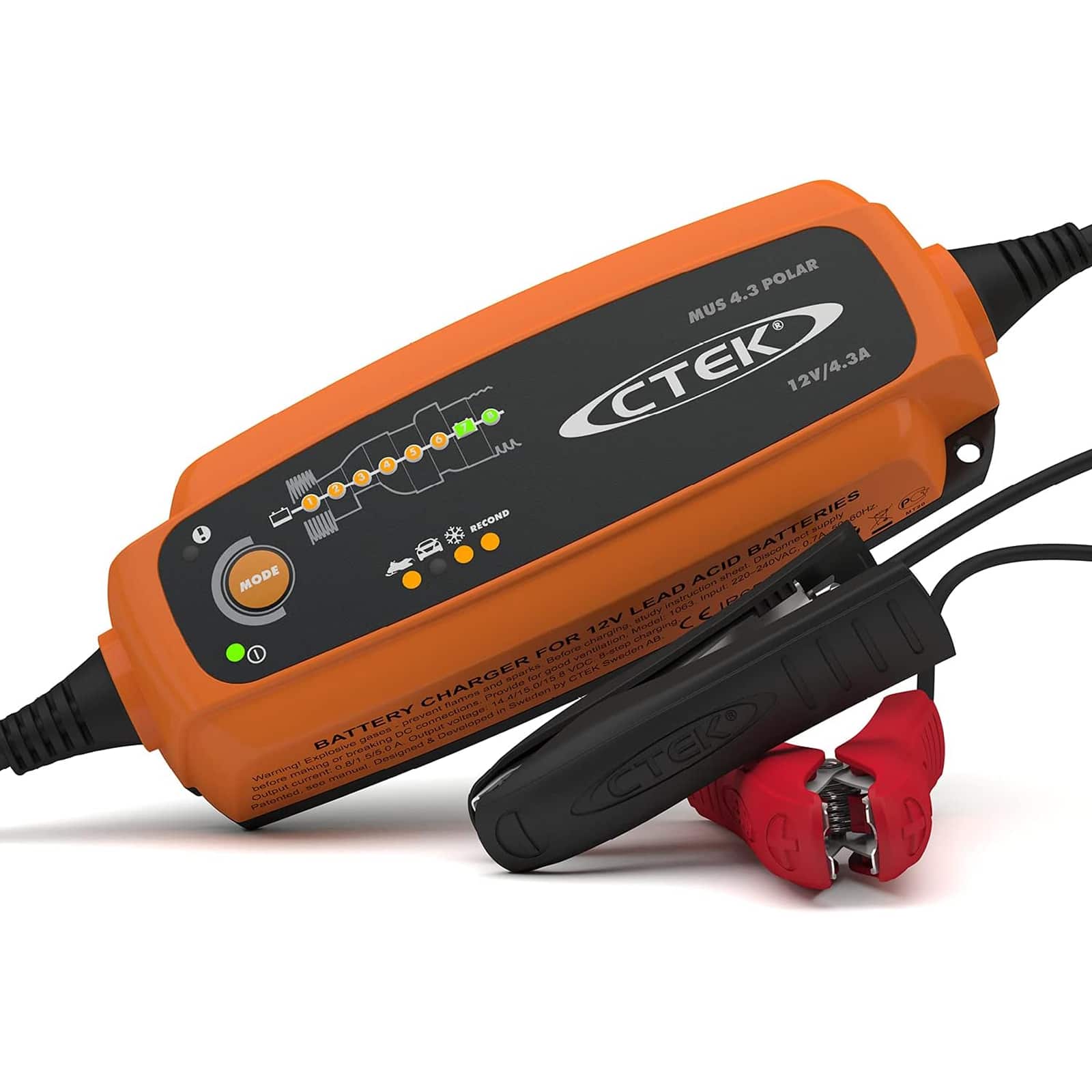
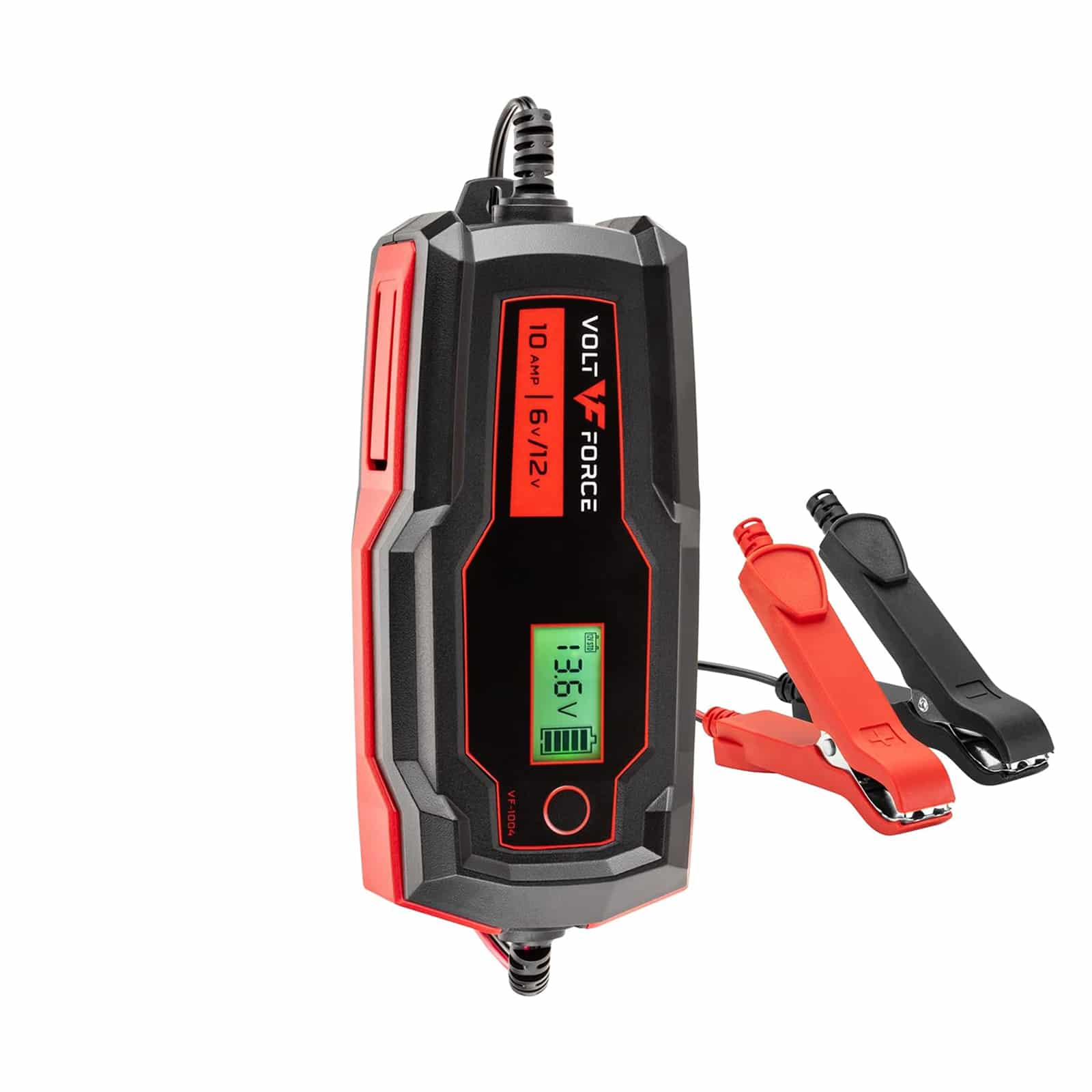
I spent the next month and a half buying every recommended unit I could find. NOCO Genius models, multiple Battery Tender SKUs, the premium European charger, the Sealey, two no-name Amazon contenders, and 30 more. I drove between three different garages — mine in Pennsylvania, my brother's in Minnesota for the cold-weather work, and a buddy's tractor shed in Texas for hot-climate float testing. I logged voltages, temperatures, charge times, and recovery success on a spreadsheet I'm still embarrassed by.
The result kept pointing the same direction. One unit handled every battery I threw at it without needing a second charger or another adapter purchase, and it did the cold-weather work on a winter-stored Indian Chief without missing a beat. Here's what I found.
Here's what I found.
My Test Results
The testing protocol ran 6 weeks across three garages, four climate conditions, and seven different battery types. I bench-tested each charger on a freshly-discharged 12Ah AGM motorcycle battery, a 50Ah flooded F-150 truck battery, a 6V flooded battery in a 1965 Mustang, and a 16Ah LiFePO4 lithium pack out of a 2024 sportbike. Then I rotated each unit through unattended winter-storage simulation: 4 weeks plugged into the same battery in a -12°C (10°F) to 10°C (50°F) garage with daily voltage checks.
Scoring lived against the four criteria from the methodology grid above — Battery Compatibility (chemistry coverage and 6V/12V auto-detect), Cold-Weather Performance (cable flexibility, float stability, temperature compensation), Charging Versatility (recovery from deep discharge, repair-mode effectiveness, global voltage input), and Build & Storage (cable management, glove-box fit, clamp grip). Each charger faced the same battery, the same temperatures, the same connection sequence — apples-to-apples.

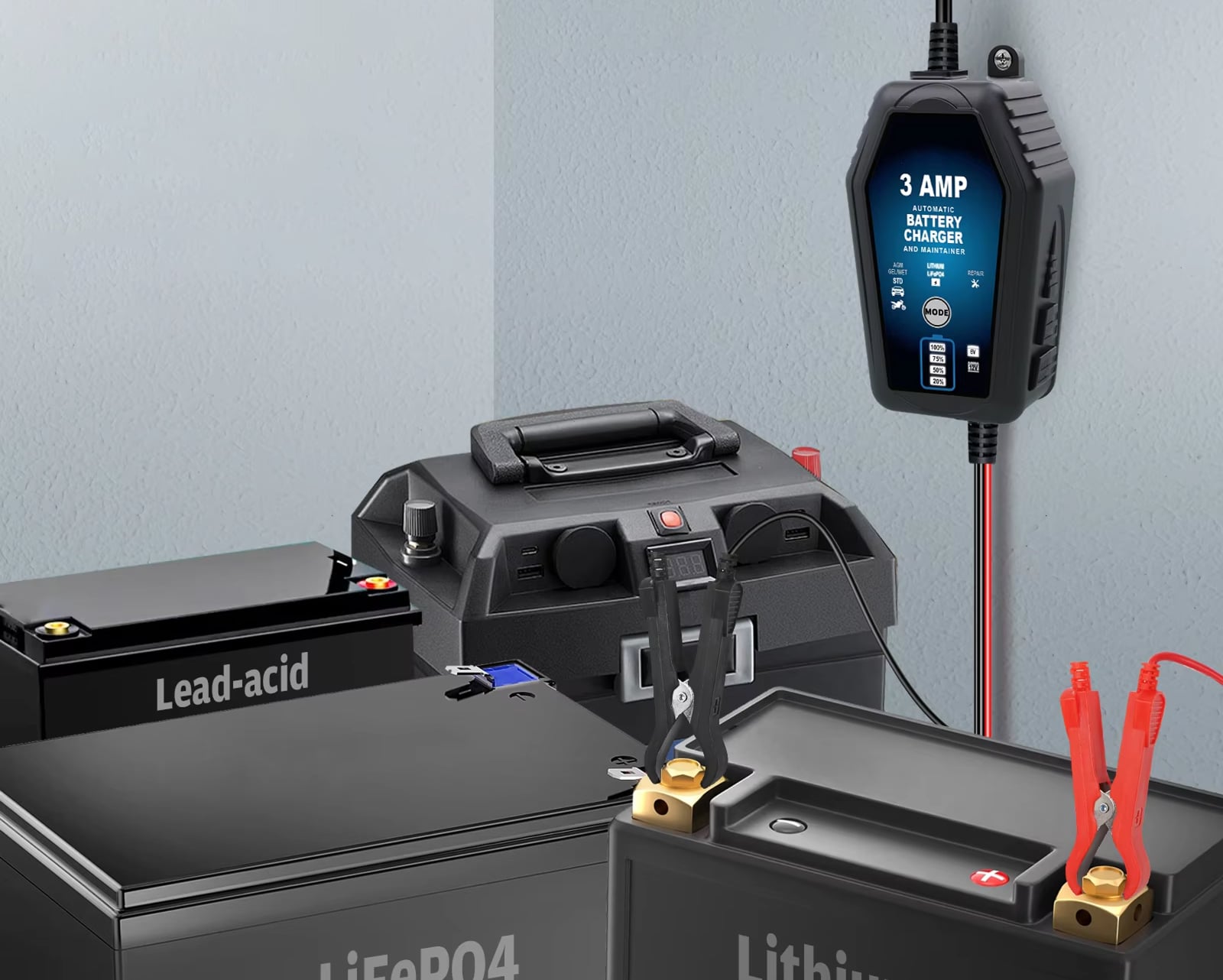
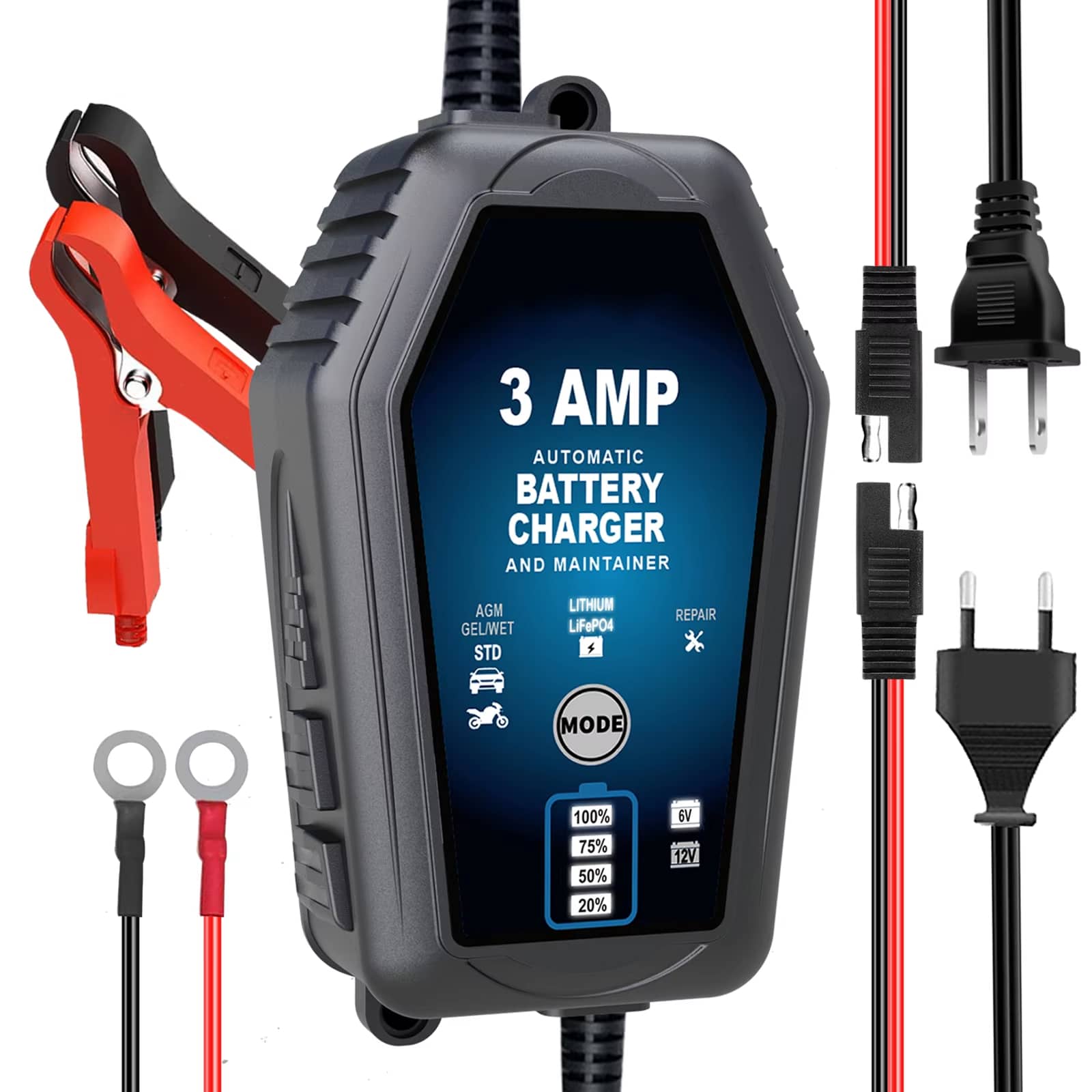
The first finding hit on day three. AmpForge auto-detected the 6V Mustang battery and the 12V truck battery without me touching a switch — that's a bigger deal than the spec sheet suggests, because most chargers in this price band either skip 6V or hide it behind a hardware toggle that's easy to misset. On the LiFePO4 sportbike pack, the dedicated lithium mode held a textbook 14.4V CV stage and dropped cleanly to float once the cells balanced.
Secondary testing turned up the Repair-mode result that surprised me most. I'll admit I came in skeptical — pulse desulfation gets called "voodoo" on the forums for a reason. I ran it on a 9-month-old AGM that had sat at 9.1V through winter. After a 24-hour pulse cycle, the battery measured 12.6V and held a 100W headlight load for 90 minutes without sagging. Not every dead battery comes back, but this one did.
The honest weakness: the unit is small, and the LED indicator is small with it. In bright sunlight on an outdoor driveway, you have to angle the case to read the stage. Not a deal-breaker, but the type of detail you only catch in real-world use. Stock availability is the other knock — the manufacturer cannot keep restocks in inventory more than a few days.
The Results:
That four-finding stack is what landed our top pick at the 9.8 score and earned the recommendation. See current pricing and bundle availability here.

Value
Since I've been running this charger, I've stopped buying separate units for the lithium bike and the lead-acid truck. I've stopped paying the proprietary-connector adapter tax — three vehicles, three SAE pigtails, one charger. The mental load of remembering which charger goes with which battery is gone, and that's a real reclaim of garage time on every weekend project.
The cost of doing nothing is the slow drain everyone in this hobby pays without naming it. A neglected AGM that needs replacing because it sat through one summer at 11V. A bike battery dead the morning of a planned ride. Two years of buying cheap trickle chargers that quietly stop working between fall and spring. Pick any of those and the math on a quality multi-chemistry unit looks obvious in retrospect.
Build quality through six weeks felt better than I expected. The clamps grip without chewing terminal posts, the case shrugged off a workbench drop, and the SAE pigtail clicks home with the satisfying detent of a real connector. Combined with a proper warranty, this is the kind of purchase that earns the "I should have bought this years ago" reaction once it's in the drawer.
One Drawer, Every Vehicle

The actual day-to-day improvement is small and constant. Walk into the garage on a Saturday, decide to ride the bike, find the SAE pigtail under the seat, click it into AmpForge, walk away. Come back in three hours with a topped-off battery and a bike that fires on the first crank. No drawer-rummaging. No "wait, is this the lithium mode or the AGM mode?" anxiety. One charger, every vehicle.
It's also the right unit for households where one person handles the maintenance and another only wants the riding mower to start in May. Garage-keepers, motorcycle riders with seasonal storage, classic-car owners juggling 6V and 12V, hurricane-prep families with a boat and a generator and an RV — anyone with more than one battery in the building gets the value of a single charger that handles all of them.
Customer Reviews
I run a small landscaping operation — one F-250, two zero-turn mowers, a quad, and a bass boat for weekends. Before this charger I had four different units and three of them needed adapters I'd lose by July. The SAE plug means my existing pigtails work and I'm down to one charger on the workbench. Repair mode brought back a 5-year-old mower battery I was about to throw out — saved me a replacement.
My Indian Chief sits from October to April in an unheated garage that hits -15F some nights. Last winter the trickle charger I'd been running quit somewhere in February and I didn't notice — battery was a brick by spring. This year I switched to this unit. Plugged it in November 3, walked out April 12, battery read 12.74V on the multimeter and the bike fired second crank. That's all I needed.
Was a "voodoo or real" skeptic on pulse repair until I tried it. Had a 4-year-old AGM at 9.4V after sitting 8 months in the boat. Ran the Repair mode 26 hours, came back at 12.6V and held a load test for 30 minutes without dropping under 12.2V. Cranked the engine on the boat that weekend like nothing happened. Saved me a fresh AGM purchase and now I'm using it on a tractor battery that's been sitting since 2023.
Frequently Asked Questions
Yes. The unit has three dedicated modes — STD/AGM, Lithium/LiFePO4, and Repair — selectable with a single MODE press. The chemistry profile is voltage-matched at the firmware level so a flooded battery in your truck and a LiFePO4 pack on a sportbike both get the right charge curve from the same hardware.
That single feature is why most of the multi-vehicle garages I tested in retired their second and third chargers.
Yes. The unit auto-detects 6V and 12V systems on connection. I tested it on a 1965 Mustang 6V flooded battery and a 12V AGM in a 2019 F-150 back-to-back — no toggle, no manual mode-switch — clamp on and go. Most budget-tier chargers either skip 6V entirely or force a hardware toggle that's easy to misset.
No — and the manufacturer explicitly states this in the manual. This is a charger and maintainer, not a jump-pack. If your battery is fully dead and you need to start the engine right now, you want a dedicated jump-starter for that job.
This unit is what you use to bring that battery back to full health overnight, or to keep it topped off through winter storage so you never need a jump in the first place.
Repair mode runs a pulse-desulfation cycle that breaks down the lead-sulfate crystal buildup on aging flooded and AGM plates. I'll be straight with you — pulse repair is real but probabilistic.
On a battery that's been neglected for 8 months and reads 9.4V, I've watched it recover to 12.6V over a 24-hour cycle. On a battery with a shorted cell, no pulse charger on earth will save it. Worth trying before you replace a still-recoverable AGM — but don't expect miracles every time.
Yes. The unit moves to a maintenance float once the battery hits full charge, then cycles on only when voltage drops below threshold.
Combined with the temperature-compensation circuit, it self-adjusts for a --12°C (10°F) unheated garage or a 35°C (95°F) summer shed. I left it on a Goldwing battery for 18 weeks during testing and the battery measured 12.7V on the day I disconnected it, with no electrolyte loss and no swelling.
Standard SAE quick-disconnect plus alligator clamps in the box. No proprietary plug, no recurring adapter purchase for every additional vehicle. If you already have an SAE pigtail wired into a motorcycle, ATV, or boat, the charger clicks right in.
This is the single biggest reason buyers switch away from proprietary connector ecosystems on competing chargers.
Yes. The unit accepts 100-240V AC input, so it works on US, UK, EU, AUS, and Japanese mains as well as inverter-fed sailboat shore power. Bring the right plug adapter for the wall outlet and the charger handles the voltage difference internally.
On a 12Ah lithium motorcycle pack at 60W output, full charge from ~9V back to 12.8V landed at 2 to 4 hours in my tests, depending on cell health and ambient temperature.
A 50Ah AGM in a truck takes overnight — call it 8 to 10 hours from a deep discharge. The unit shows status via LED so you can leave it and check in the morning.
Purchase and Delivery Process
The charger is sold exclusively through the brand's online store — no parts-counter markup, no dealership middleman, and no proprietary-accessory upsells at checkout. Ordering takes about 2 minutes once you're on the page.
Stock is the real catch. When I first tried to buy a unit at the start of the test, it had been sold out for nearly two weeks. I had to set a back-in-stock alert and wait. Restocks land and then disappear within a few days — the manufacturer simply cannot keep pace with demand. If you see it available on the page right now, that's not always the case next week.
Once your order is in, shipping is fast — most US addresses see a unit on the doorstep inside 5 to 7 business days. International orders take a bit longer.
Visit the official store to confirm availability before anything else. Order the moment you see it in stock — back-orders during the test cost me 14 days I'd rather have spent on the bike.
Where Can I Buy the AmpForge?

Getting your own AmpForge with a 50% discount is straightforward. Follow these steps: