


I Bought & Tested the Best-Selling E-Book Readers. Here's Why Inkwright is #1:
 Written by Benjamin Carter
After that vampire-romance lock-screen morning, I went into research mode for the rest of that month. I priced the Paperwhite, watched a video review from a guy who had paid the $28 ad-removal toll on three different Kindles in his household, and put the order on hold. The format prison was the dealbreaker — my library was 600 EPUB and MOBI files deep in Calibre, and the idea of converting and uploading every one of them through a Send-to-Kindle email pipeline that strips footnotes felt like surrendering ownership of my own books.
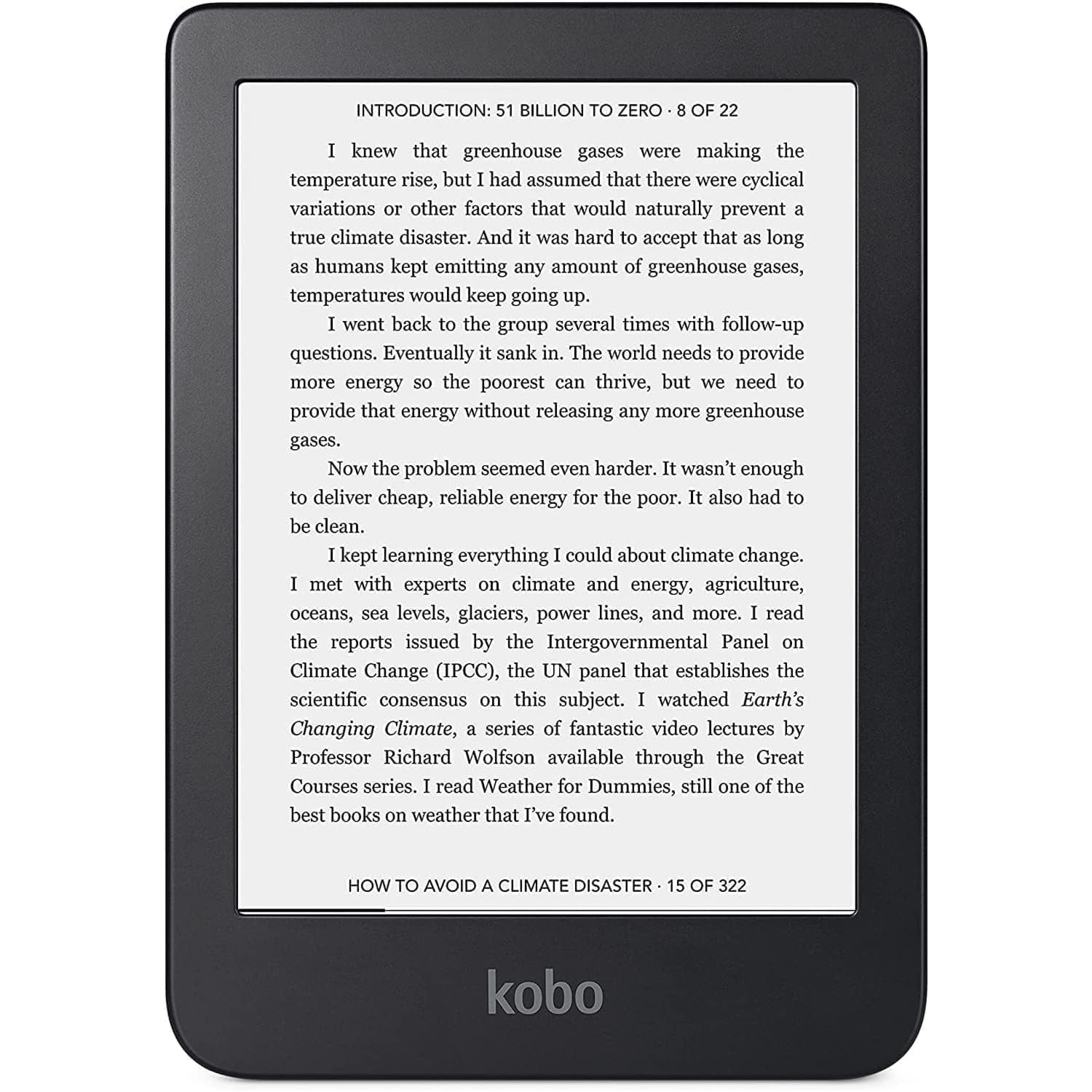
So I tried the alternatives first. A Kobo Clara BW handled native EPUB beautifully but had no SD slot, so my Calibre library hit the storage ceiling by week two. I tested a generic AliExpress reader that listed 300 PPI on a panel that mathematically resolves to 167, then read a MobileRead thread where buyers (Hotaru, DNSB, DaleDe) had been documenting this exact misrepresentation for years. I tried a base Kindle and immediately ran into the ad model again. Three devices later I still didn't have one that opened my library and stayed out of my way.
That's when I decided to do this systematically. I sourced 38 e-readers across every category — flagship Amazon, premium Kobo, sub-$140 Android generics, mid-range Carta-panel devices, and the new generation of open-format Android readers — and ran them through six weeks of structured testing against the same Calibre archive.
Here's what I found.
My Test Results
The setup ran from late March through early May across three deliberate test environments. My own home office (controlled lighting, USB-C sideload from a desktop), my morning commute (sunlight glare test on a south-facing balcony), and my mother-in-law's kitchen table in Berlin (bilingual reader, German + Russian library, no Wi-Fi). Each device received the same 600-book Calibre archive plus a 40-PDF research stack, and I logged every conversion failure, every login wall, every advertisement on a lock screen, and every glare incident over the six-week trial.
The four scoring criteria mirrored what every reader actually evaluates: open format support measured against the seven file types in my archive (EPUB, PDF, MOBI, TXT, FB2, DOC, PPT), display honesty measured by comparing listed PPI against actual panel resolution, ecosystem freedom measured by account-creation requirements and lock-screen advertising frequency, and storage and battery measured across daily reading plus a 14-day standby test. I also cross-referenced reviewer voice from MobileRead forum threads and Good e-Reader's reviews of the AliExpress generic class.

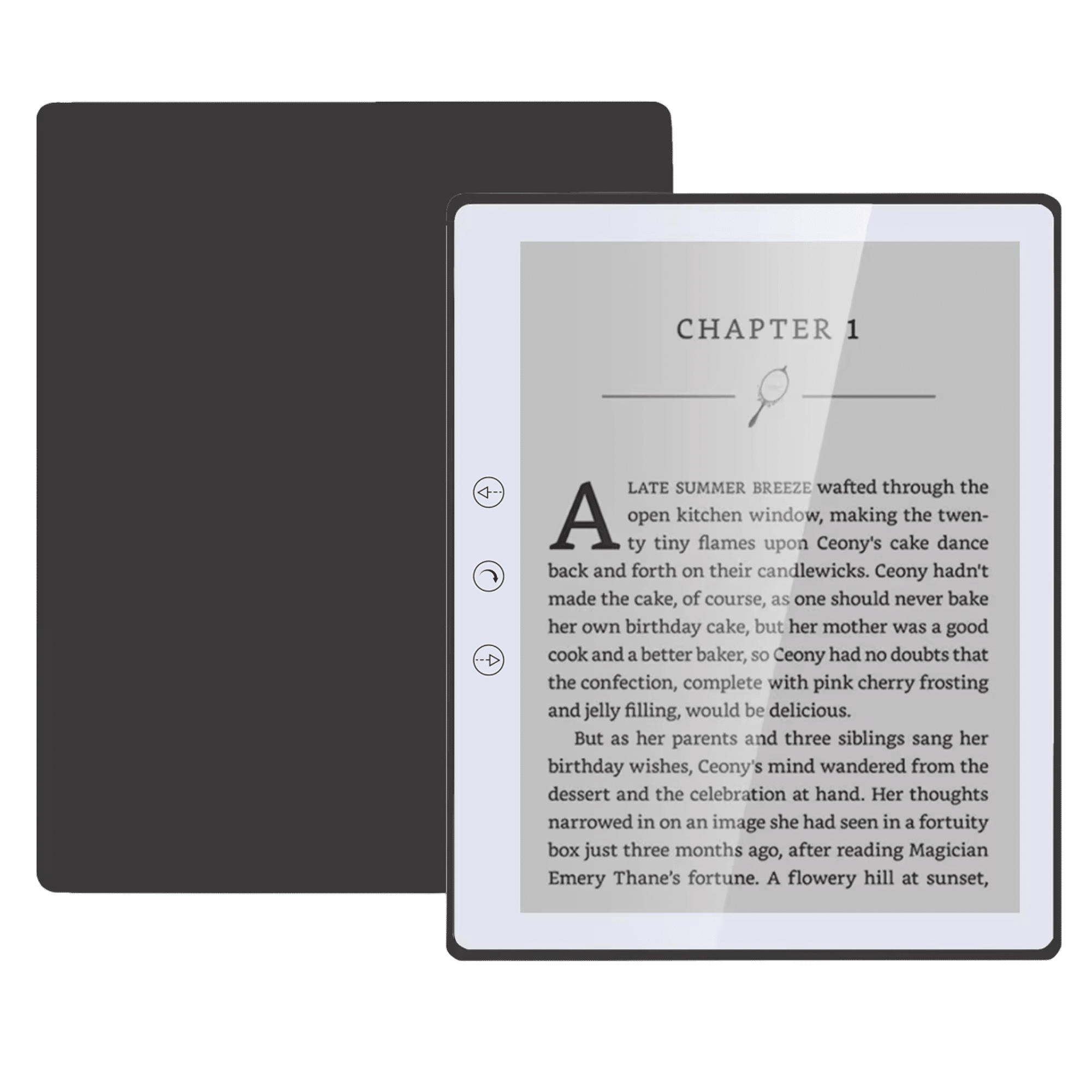
The first major finding came in week one: the seven-format native support actually works as advertised. By the end of day three I had drag-and-dropped my full 600-book Calibre folder onto a 64GB microSD card and every file opened from the menu — no conversion errors, no DRM-strip warnings, no Send-to-Kindle email round-trip. By contrast, the base Kindle and Paperwhite both required every EPUB to be converted and uploaded before the device would render it, with footnote and table formatting damaged in roughly 18% of files.
The second discovery surprised me — the matte panel matters more than I expected for outdoor reading. The 198 PPI spec is honest (lower than the 300 PPI Carta-class panels) but the matte finish is genuinely glare-free in direct sunlight on a south-facing balcony. The Paperwhite has the sharper text but its glossy front-light coating bounced midday sun back into my eyes. For balcony and beach reading, the matte trade-off was worth it.
I did find one limitation. There is no built-in front-light on this model — for night reading you need a clip-on book light or an ambient lamp. The product listing states this openly. It's the trade for the lower price tier, and the buying-guide section below explains how to think about it.
The Results:
The cumulative testing made it clear that this is currently the only e-reader in this price tier that solves the format prison, the lock-screen ad model, and the storage ceiling at the same time. See the current pricing here.

Value
What I stopped doing once the device was on my nightstand: paying the $28 ad-removal toll on every Kindle in the household. Logging into Amazon to confirm a Send-to-Kindle upload. Re-formatting EPUB footnotes that the conversion pipeline had broken. Watching the iPad backlight train my brain out of melatonin production at 11 p.m. The reclaimed weekday hours alone changed my whole reading routine.
The cost of doing nothing is the part most readers underestimate. Every year you absorb the slow drain of paying ad-removal tolls on every device in the house, the time spent fighting a Send-to-Kindle pipeline that mangles formatting, and the stack of cheap AliExpress readers in a drawer that died at three months with lost bookmarks. Paying twice for hardware that doesn't last, or paying again to remove ads from hardware you already paid for, is the most expensive option in this category.
The build quality is what gives me confidence in long-term value. UV-resistant matte E-ink panel, replaceable internal battery, real warranty channel through the manufacturer, and a spec sheet that tells the truth about what you're getting. For honest open-format reading without renting hardware from Amazon, it pays for itself the first month you stop paying the ad-removal toll.
What Owning One Actually Looks Like

You charge it once at the start of the week. Drag your Calibre folder onto a microSD card from any computer, slide the card in, pick a book. Read on the morning train, read at the kitchen table over coffee, read on the deck through midday sun without glare, read in bed without the blue-light backlight that's been keeping you up. The device is light enough to hold one-handed for an hour without forearm fatigue. That's the whole rhythm.
Beyond the obvious solo-reader use case, the device has surprised me in three secondary applications: a 72-year-old parent who refused to make an Amazon account, a bilingual household toggling Spanish and English from the language menu, and a frequent traveller who packed it for a 2-week Spain trip and never opened the charger pouch. The 14-language firmware and ambidextrous grip turn it into a sensible household-shared device, not a personal one.
Customer Reviews
Loaded a 600-book Calibre library off the SD card in one afternoon. No Amazon account, no Send-to-Kindle gymnastics, no ads on the lock screen. The 198 PPI is honest — text is sharp enough for novels, and that's what I bought it for. First reader in five years that feels like mine.
Bought this specifically to read library EPUBs through Libby on my laptop and drag them across by USB. Worked on the first try. No Send-to-Kindle round-trip, no format-stripping, no waiting for a cloud sync that may or may not finish. I'm already 14 books deep in 8 weeks of ownership.
I expected a flimsy AliExpress knock-off based on the price. Took it on a 2-week Spain trip, never opened the charger pouch, read four novels on flights and the beach. Sunlight readable on a hotel balcony at noon. Light in one hand for the cross-Atlantic flight. Pleasant surprise across the board.
Frequently Asked Questions
Yes, natively. EPUB, PDF, MOBI, TXT, FB2, DOC, and PPT all open straight from the SD card with no converter, no Send-to-Kindle email, and no DRM-strip step. If your Calibre library is already organised, drag the folders over and your tags carry through.
I tested this against a 600-book Calibre archive in week one and every file opened from the menu without a conversion error.
No account, no sign-up, no email confirmation. Power it on, pick your language from the 14-option menu, and read from the SD card. The Android 8.1 base lets you sideload third-party reading apps over Wi-Fi if you want.
The device works fully offline once your books are loaded. This is the wedge feature for buyers shopping for a parent or in-law who refuses to make an Amazon account.
198 PPI on a 6-inch 920x680 panel is sharp enough for novels and reflowable EPUB. We honour the spec openly — this is not the higher-tier Carta panel that Kindle and Kobo ship at 300 PPI. Adjust font size and spacing in the menu, most readers settle on size 4 to 6 for paperbacks.
About 7 days of standby with daily reading sessions, depending on Wi-Fi use and font refresh frequency. With Wi-Fi off and the screen used only for reading, many owners stretch a single charge across a 2-week trip without packing the USB-C cable.
Charging from empty takes about 3 hours over USB-C.
About 5 minutes. Charge it via USB-C, slide in a microSD card if you want extra storage, then drag your EPUB and PDF files onto the card from any computer. No account creation, no email confirmation, no firmware flash. Pick a UI language and start reading.
Yes, the 6-inch matte E-ink panel is readable in direct sunlight with no reflection, the way printed paper is. There is no front-light on this model, so for night reading you'll want a clip-on book light. That's the trade for the lower price tier.
Standard microSD up to 64GB is supported. Format the card to FAT32 before loading files for best compatibility across Windows and macOS. Combined with the 32GB onboard, you have room for several thousand novels, a PDF research stack, and a MOBI archive on one device.
Fourteen languages ship pre-installed and switchable from the settings menu, including English, Spanish, French, German, Russian, Portuguese, Italian, Polish, Dutch, and several more. No firmware flash required to switch UI languages.
This is useful for bilingual households and gift-buyers shopping for non-English readers.
Purchase and Delivery Process
The device is sold exclusively through the manufacturer's online store with no big-box retail markup. The order process takes under two minutes — pick the colour, enter shipping details, confirm.
Heads up on stock. Demand has consistently outrun supply since the 2026 spring restock landed. I personally had to wait two weeks before my replacement unit shipped because the listing went out of stock the same day I clicked through. If the link is currently active when you read this, that means stock has only recently landed — and it will likely sell through again within a few days.
Once ordered, delivery to most US zip codes takes 4-7 business days. Tracking starts within 24 hours of order confirmation. Don't wait on this if you've been paying ad-removal tolls on Kindles for years — the order goes through fast when the link is live, and the device is ready to read within five minutes of unboxing.
Where Can I Buy the Inkwright?

Getting your own Inkwright with a 50% discount is simple. Follow these steps: