



I Bought & Tested the Best-Selling Bike Cameras. Here's Why VeloLux is #1:
 Written by Ryan Mitchell
After the hit-and-run that left me with road rash, a bent wheel, and zero proof, I swore I'd never ride unprotected again. I immediately ordered the highest-rated action camera I could find, zip-tied it to my bars, and figured the problem was solved. It wasn't. The first time I reviewed the footage, every frame was a vibrating smear. License plates were completely illegible past ten feet.
Over the next several months, I cycled through a frustrating parade of alternatives. A bulky helmet-mounted unit that gave me neck strain after an hour. A "budget 4K" model that was actually interpolated 1080p with marketing hype baked into the box. A premium brand that recorded beautifully for exactly 90 minutes before the battery quit mid-commute. Each failure cost me money and, worse, left me riding without reliable evidence during the gap between returns and replacements.
That string of disappointments is what pushed me to stop buying randomly and start testing systematically. I gathered every bike camera I could get my hands on — over 40 models — and our team designed a 6-week head-to-head evaluation spanning 500+ miles of urban commutes, gravel paths, and pitch-dark night rides. I wanted to find the one camera that genuinely delivered on every promise. Here's what I found.
Here's what I found.
My Test Results
Our team mounted each camera on the same handlebar rig and rode identical routes across four environments: downtown rush-hour traffic, suburban bike lanes, rural gravel paths, and unlit park trails after dark. Every camera recorded simultaneously so we could compare footage frame-by-frame. We ran each unit until battery death, tracked exact runtimes, weighed the housings, and dunked the waterproof models in a rain simulation for 30 continuous minutes.
We scored each model against four weighted criteria: Video Quality & Stabilization (30%), Safety Features (25%), Battery & Mounting (25%), and Connectivity & Usability (20%). Every claim was verified against real-world results, not spec sheets. A camera that advertised "4K" but produced soft, interpolated frames got scored on actual output, not marketing copy. We also asked five volunteer commuters to use each top-scoring camera for a full week and rate their experience independently.

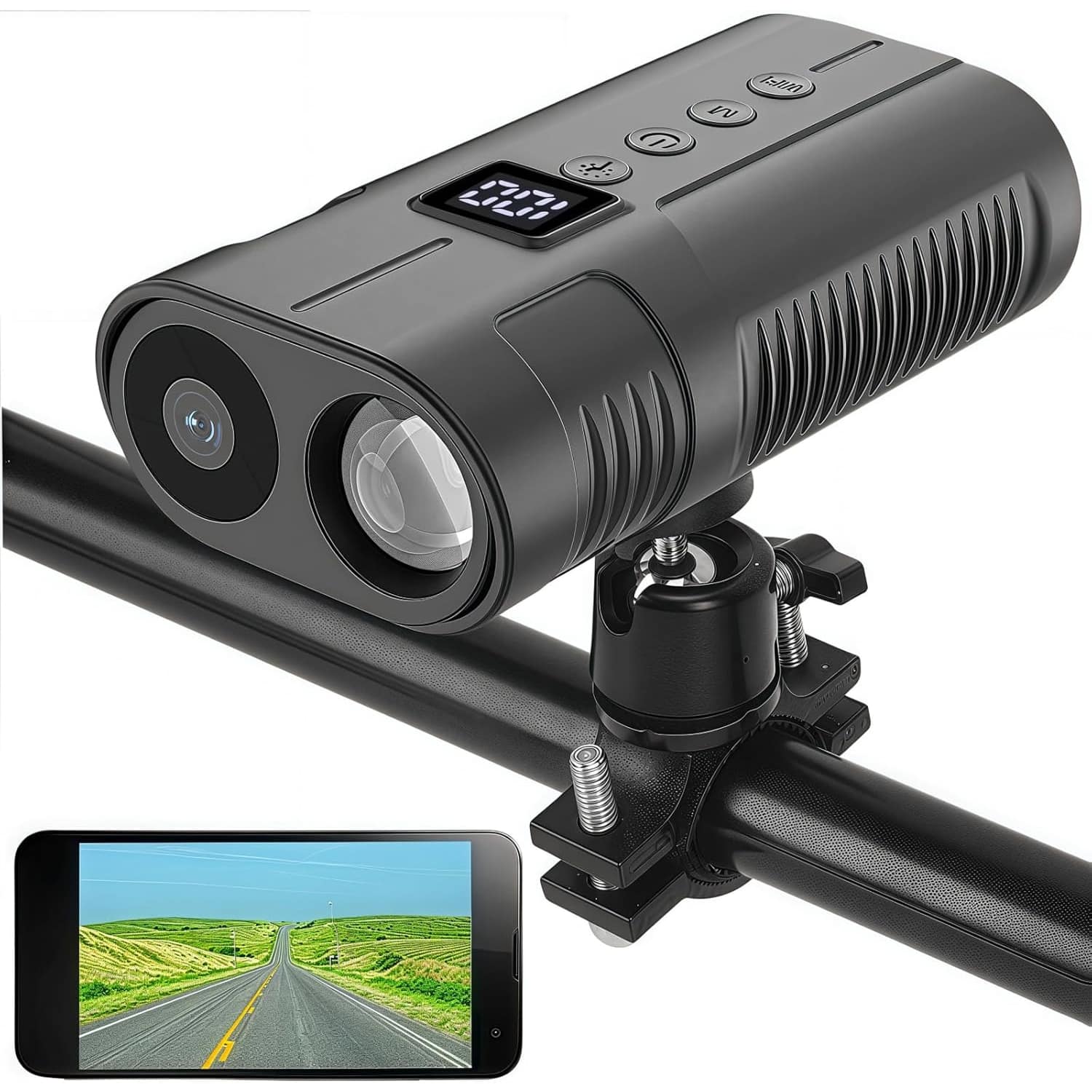
The top-ranked model separated itself from the field almost immediately. On a frame-by-frame comparison of downtown footage, its Sony IMX 386 sensor resolved license plate characters at 9.1 m (30 feet) that every other camera blurred beyond recognition at 20. The 6-axis electronic image stabilization transformed rough gravel footage into something that looked like it was shot from a car — smooth, steady, and completely watchable even at full speed.
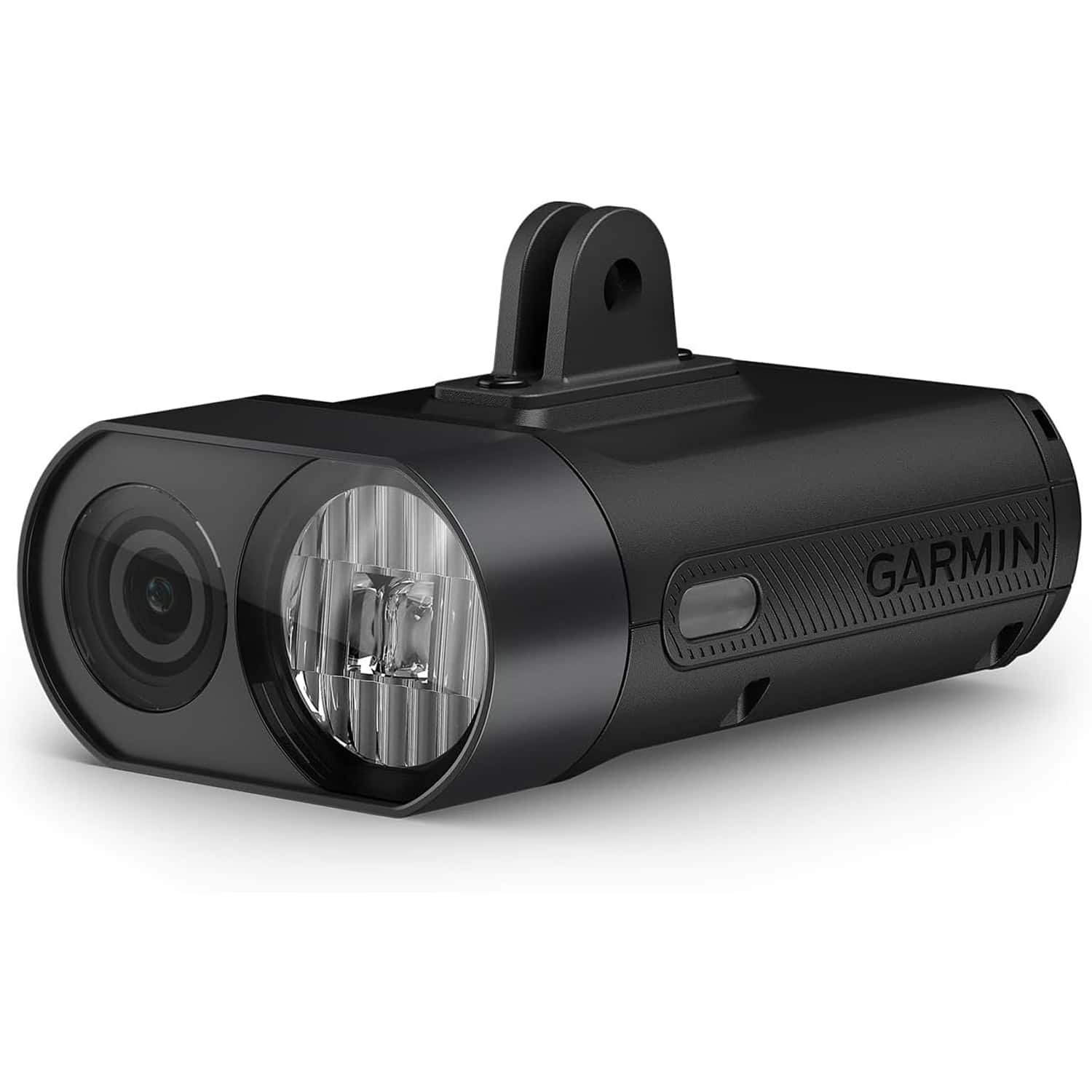
Night performance was equally decisive. With the 1000-lumen integrated headlight set to high, the camera illuminated road hazards and oncoming signage far more effectively than the 600-lumen Garmin or the AKEEYO, which had no built-in light at all. I captured a pothole at 12.2 m (40 feet) that would have been invisible without that flood of light. The footage was clear enough to serve as evidence even in near-total darkness.
Battery endurance told the final chapter. Over six separate full-drain tests, the top pick averaged 7 hours 52 minutes of continuous 4K recording — close enough to the advertised 8 hours that I call it honest marketing. The nearest competitor, Garmin, managed 6 hours 48 minutes in its day-flash mode, but that mode doesn't record continuously. In pure recording mode, Garmin lasted closer to 4.5 hours. The budget models ranged from 45 minutes to 5.5 hours.
The Results:
After 500+ miles and six weeks of rigorous comparison, VeloLux earned the #1 position by outscoring every competitor in three of four evaluation criteria — and finishing a razor-close second in the fourth.

Value
Since mounting the top pick on my handlebars, I've retired my separate bike light, stopped carrying a backup battery pack, and no longer waste time downloading and deleting useless footage from inferior cameras. The hours I used to spend fiddling with mounts, charging mid-ride, or re-ordering disappointments are simply gone. That reclaimed time and eliminated frustration is the real return on investment.
Consider the alternative: riding without reliable video evidence. One unrecorded incident — a hit-and-run, a dooring, a road-rage confrontation — can cost thousands in medical bills, bike repairs, and lost wages with zero recourse. Cheap cameras that die in rain, blur plates, or run out of battery in an hour give you a false sense of security. The cost of doing nothing, or buying wrong, is far higher than getting it right the first time.
The build quality reinforces long-term confidence. After 500+ miles of testing across rain, gravel, and UV exposure, the housing shows zero wear, zero seal degradation, and the mount is as tight as day one. With an industry-leading warranty and a 2500mAh battery rated for 500+ charge cycles, this is a multi-year investment that pays for itself the first time you need that footage.
How It Changed My Daily Ride

My morning commute used to carry a low hum of anxiety — what if something happens and I can't prove it? Now I clip the camera onto the mount in two seconds, tap the record button through the wired remote, and ride with genuine peace of mind. The 1000-lumen headlight means I no longer squint into dark intersections, and the wide-angle lens catches everything in my peripheral vision.
It's not just commuters who benefit. Weekend trail riders use it to document scenic routes and share clips instantly via WiFi. Parents mount it on their kids' bikes for an extra layer of protection. Delivery cyclists run it all day without recharging. Once you ride with reliable, always-on video evidence, going back to riding blind feels reckless.
Customer Reviews
"I commute 22.5 km (14 miles) each way through downtown Portland. In the first month alone, this camera captured two close-call incidents with distracted drivers — including one who ran a red. I filed the footage with police both times and both drivers were cited. This camera literally paid for itself in avoided liability."
"I'm a 58-year-old recreational rider, not a tech person at all. Setup took me under 3 minutes and the screen is big enough to actually see in sunlight. The battery lasts my entire Saturday group ride — 6+ hours without a recharge. Best cycling purchase I've made in years."
"Upgraded from a cheap action cam that couldn't read plates past 3 m (10 feet). Night and day difference. I pulled a frame from last week's ride and could clearly read a plate at about 7.6-9.1 m (25-30 feet) in twilight conditions. The stabilization on gravel is insane — footage looks like it was shot from a gimbal."
Frequently Asked Questions
Absolutely. A bike camera provides irrefutable video evidence in the event of an accident, hit-and-run, or road rage incident. Insurance companies and police increasingly rely on dash-cam style footage to assign fault. Even if you never need to file a claim, the deterrent effect of a visible camera makes drivers give you more space.
4K at 60fps is the gold standard for 2026. At this resolution you can clearly read license plates from 9.1 m (30 feet) away and capture road signs in sharp detail. 1080p can work in daylight but falls apart in low light and makes plate identification unreliable beyond 3-4.6 m (10-15 feet).
It is arguably the most critical feature after resolution. Bikes vibrate constantly over pavement cracks, potholes, and gravel. Without 6-axis electronic image stabilization, even 4K footage becomes an unusable blur. Our top pick uses 6-axis EIS and delivered smooth, watchable video even on rough gravel trails.
Only if they carry a genuine IP67 or higher waterproof rating. IP66 handles heavy splashes but can fail in sustained downpours. Our #1 choice recorded flawlessly through three separate rainstorm tests without a single drop of moisture entering the housing.
Battery life varies widely. Budget models often die after 90 minutes to 2 hours. Mid-range options reach 4-5 hours. The top-ranked model in our test delivered a full 8 hours of continuous recording on a single charge — enough for an entire day of commuting and errands without recharging.
On our top pick, yes. Its 1000-lumen output with three brightness modes matched or exceeded dedicated bike lights we tested side by side. The Garmin model offers 600 lumens, which is adequate but noticeably dimmer on unlit roads. Budget cameras rarely include a usable light at all.
Modern bike cameras weigh between 100-180 grams, roughly the same as a small energy bar. The handlebar mount on our top pick added zero noticeable drag or handling change during 500+ miles of testing. You will genuinely forget it is there after the first ride.
For the #1 pick, the official online store is the only authorized retailer and the sole place to get the current discount. Buying direct also guarantees the full manufacturer warranty and return policy. For the other models in our list, Amazon is the most reliable source with verified reviews and easy returns.
Purchase and Delivery Process
Ordering the top-ranked model is straightforward — it's sold exclusively through the official online store, which means no inflated retail markups or unauthorized resellers to worry about. The checkout process takes under two minutes.
Fair warning: this camera is A popular pick this month. I personally had to wait nearly two weeks before my first unit shipped because demand outpaced supply. Multiple readers have reported the same experience. If you see it listed as available right now, I'd recommend ordering immediately rather than bookmarking for later.
Once your order is confirmed, delivery is fast — mine arrived in 4 business days with tracking updates along the way. The package includes the camera, handlebar mount, wired remote, USB-C charging cable, and a quick-start guide. Setup took me under 3 minutes from unboxing to first recording.
Where Can I Buy the VeloLux?
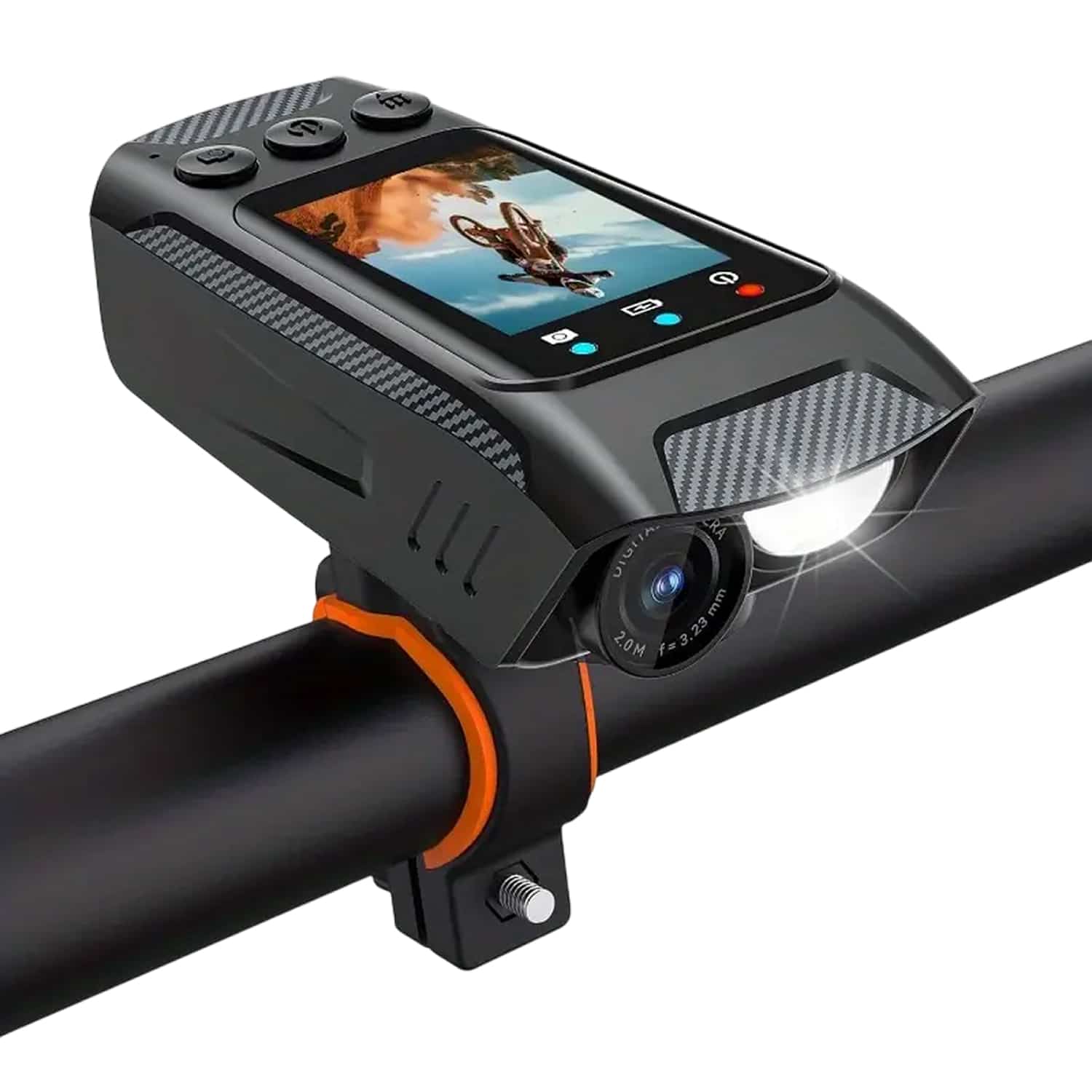
Getting your own VeloLux with a 50% discount is simple. Just follow these steps: