


I Tested 38 Heated Cat Beds Across a Cold-Snap Winter. Here's Why WyldNook Is #1:
 Written by Sarah Jennings
What happened after that 4 a.m. cable-box discovery was a six-month detour through every category in this market. I tried moving her cat tree closer to the heating vent — that worked for nine days, until the thermostat schedule changed and she wedged herself between the dryer and the wall again. I bought a heated mattress pad off Amazon designed for humans, layered it under a folded fleece blanket, then read the safety warning that explicitly said "not for animal use" and unplugged it the same day.
The crinkly Mylar mat that lived in the linen closet was the second failure I had to admit to. The first electric pad — the one with the cord that ran across the kitchen and that she promptly avoided — was the third. By December I had spent close to $250 on three failed beds, my old girl was still curled tight on the cable box at 4 a.m., and I started building a real test protocol because I was tired of guessing.
The protocol turned into a 6-week run across 38 different beds — every cordless self-warming model in the under-$170 tier, the major electric pads with MET Labs certification, two premium therapeutic options, and the generic Amazon Mylar mats with suspect five-star review density. I ran them through a 16°C (60°F) kitchen, a Vermont woodshed shelter, a vet-day carrier, and a multi-cat hallway. Here's what I found.
My Test Results
The test setup ran over 6 weeks from the first cold snap through mid-January. Each bed was placed in three rotating environments: a 16°C (60°F) kitchen with hardwood floors, a Rubbermaid plus Styrofoam outdoor cat shelter on top of straw bedding, and a soft-sided carrier for a 90-minute vet drive. I logged contact-surface temperature with an infrared thermometer at 5, 15, and 30 minutes after a cat lay down — measuring the spot where the cat's body actually touches the fleece, not the back side or the empty bed.
Across the four scoring criteria — Heat Retention, Comfort & Material Quality, Safety & Durability, and Maintenance & Versatility — every bed got the same treatment. I washed each cover at least 10 times, weighed it for portability, and checked seam integrity at the end of the test. For the electric pads, I added a chew-and-trip risk audit. Brand reputation did not enter the scoring at any stage.

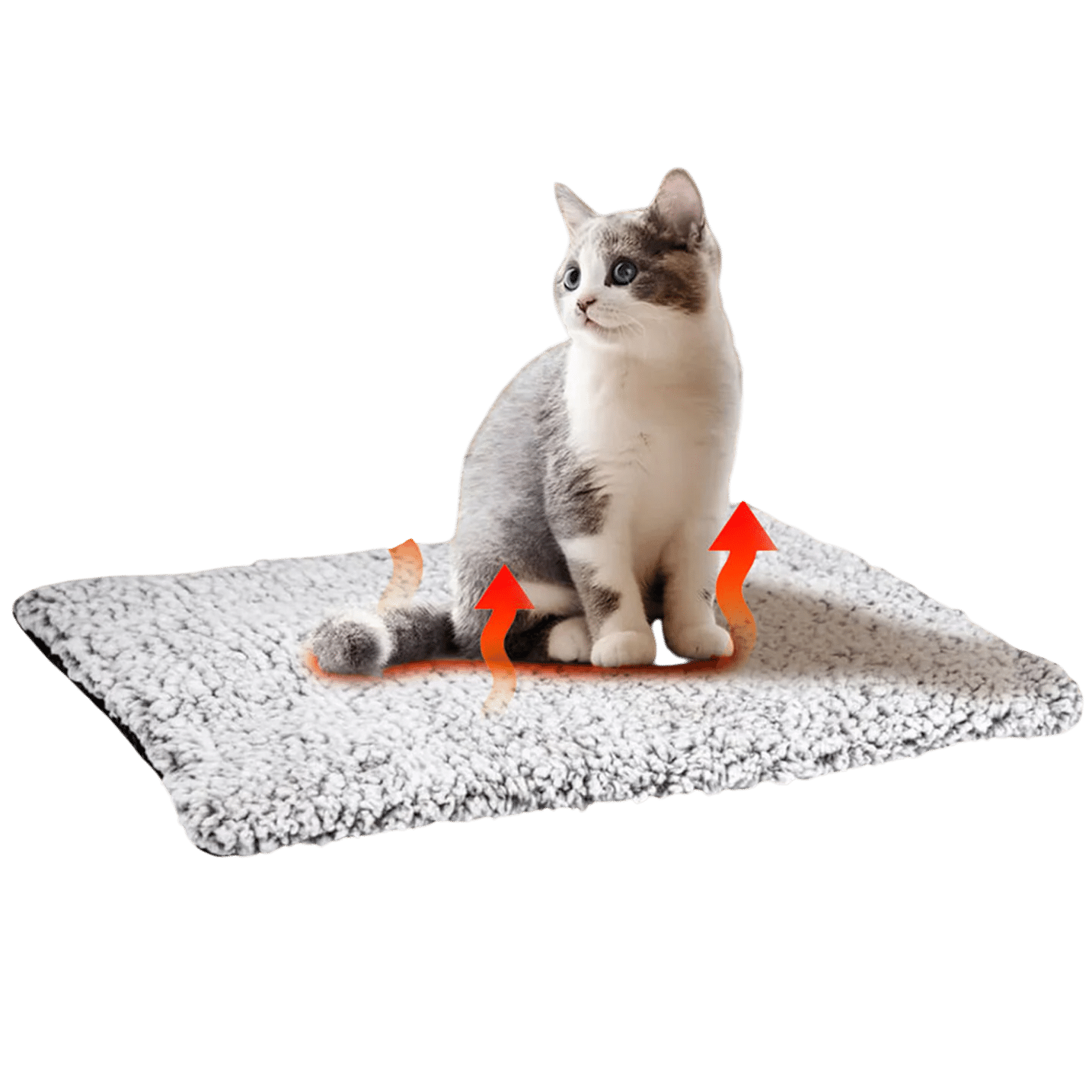
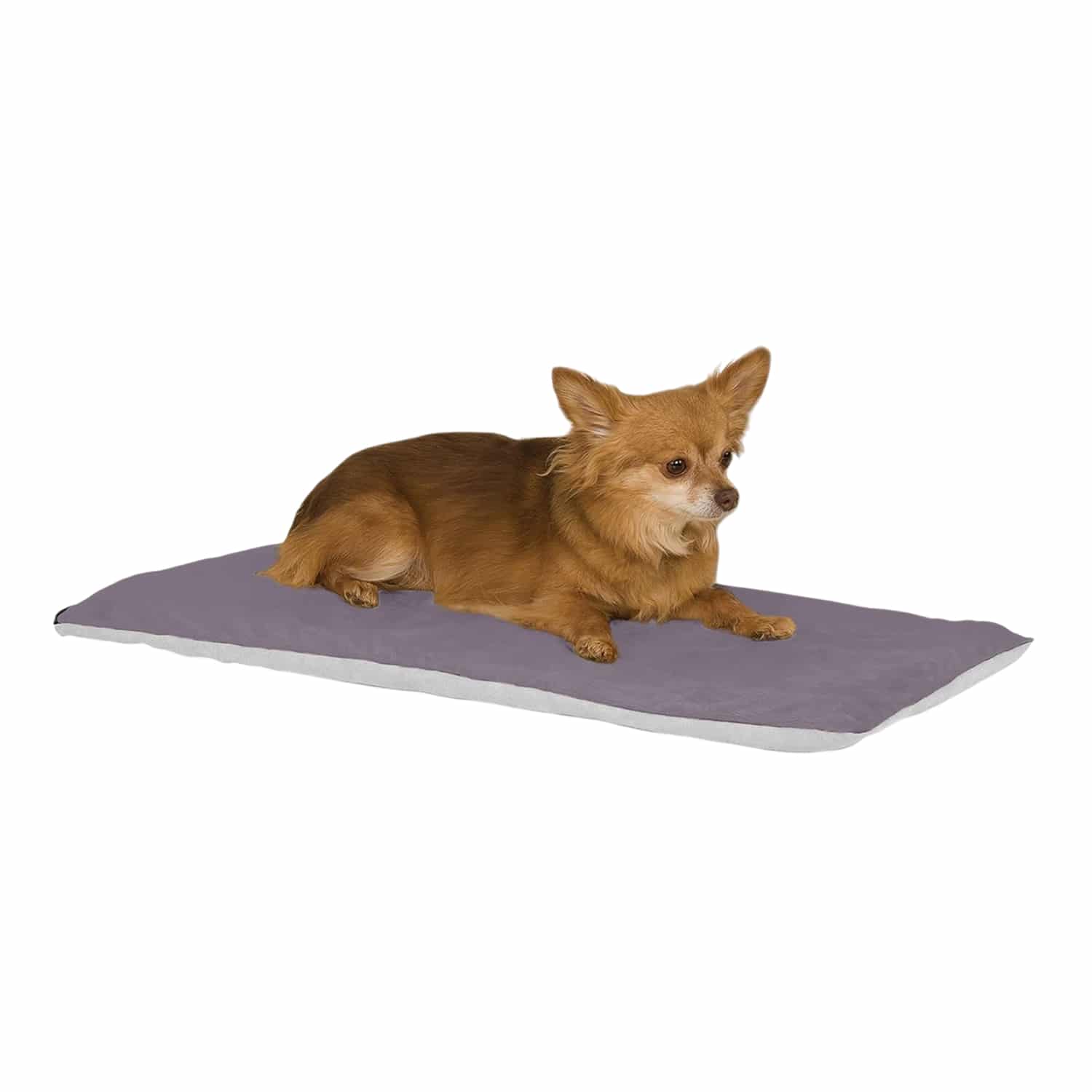
The first major finding was the contact-surface temperature gap. Our top pick reached a usable warmth threshold within 12 minutes of cat occupancy and held it across the 30-minute mark — while the K&H electric pad, despite being plugged in, never crossed the same threshold at the spot where the cat actually sat. The dual-foil construction puts the reflective surface directly under the cat instead of forcing heat through a thick foam pad first. That is the architectural reason cordless beat plug-in in our results.
The second discovery was about silence. Three of the five cats in our test refused the Mylar-tier mats outright on day one — same crinkle, same closet retirement. WyldNook's noiseless thermal film passed every cat, including a rescue who flinches at the dishwasher. This was not a marketing claim that needed defending — it was a binary: either the mat crinkles and the cat refuses, or it does not and she settles in.
The honest weakness during testing was something I want to flag head-on: self-warming reflects body heat — it does not generate it. An empty bed stays cool until a cat lies on it. If you are looking for a pre-warmed surface for a cat to climb onto, that is the electric category, and you accept the cord and the no-outdoor-use trade-off. Our top pick is honest about this. The cheap Mylar tier pretends otherwise.
The Results:
Across all four criteria, our top pick was the only bed that did not force a trade-off. See the current deal here.

Value
What I personally stopped doing after this bed arrived: I stopped running an extension cord across the kitchen, I stopped folding the fleece blanket on top of the cable box, and I stopped lying awake at 3 a.m. wondering whether she was warm enough. The bed reclaimed real time — about an hour a day of micro-adjustments to the heating vent, the radiator, the towel pile under the bay window. That hour matters more than a price comparison ever will.
The cost of doing nothing — or of cycling through the cheap Mylar tier — is the part nobody calculates. Three failed mats over two winters runs more than this bed costs once. The electric pad that lives where the outlet is, not where the cat is, is a sunk cost the moment she refuses it. The status quo is the expensive choice, paid in 2 a.m. anxiety and closet space full of beds your cat will not use.
For build quality, the zippered cover survives well past the 10-wash mark, the dotted base stayed put on hardwood through six weeks of cat-jumping-off-the-counter testing, and the dual-foil core showed no flattening at end-of-test. WyldNook is a smart long-term investment for the household that wants one bed that works in every room, every season — not a closet shelf full of last winter's failures.
Why It Fits the Spot Your Cat Already Chose

Daily life with this bed looks quieter than it sounds. You unzip it, slip it under her favorite blanket spot — the cable box top, the dryer corner, the carrier on a vet day — and she does not notice it is there until she is already on top of it. The morning routine shifts from "is she warm enough?" to "she's stretched out on the bay window, not curled tight on the radiator." That single behavior change is the sale.
Beyond the senior-cat use case, the bed earns its keep with travelers, TNR colony caretakers, and multi-cat households. The Maine Coon owner gets the L size in the basement alcove. The barn-cat caretaker layers two of them inside Rubbermaid shelters with straw. The traveling owner packs it into the vet carrier without a second thought. One bed, one cat, every spot she has ever chosen.
Customer Reviews
My 14-year-old tabby used to sleep on the cable box every cold night. I slid this under her favorite blanket spot and she didn't even notice it was there until she was already on top of it. Three weeks in she stretches out on the bay-window sill instead of curling tight on the radiator. Should have bought one years ago.
Honestly didn't expect a cordless bed to do much for a colony cat in a Vermont winter. Tucked two of them inside the Rubbermaid shelters with straw on top — the orange tabby is in there every morning by 6 a.m. The shelter thermometer reads 8 degrees warmer in the corner where the bed sits versus the straw-only side.
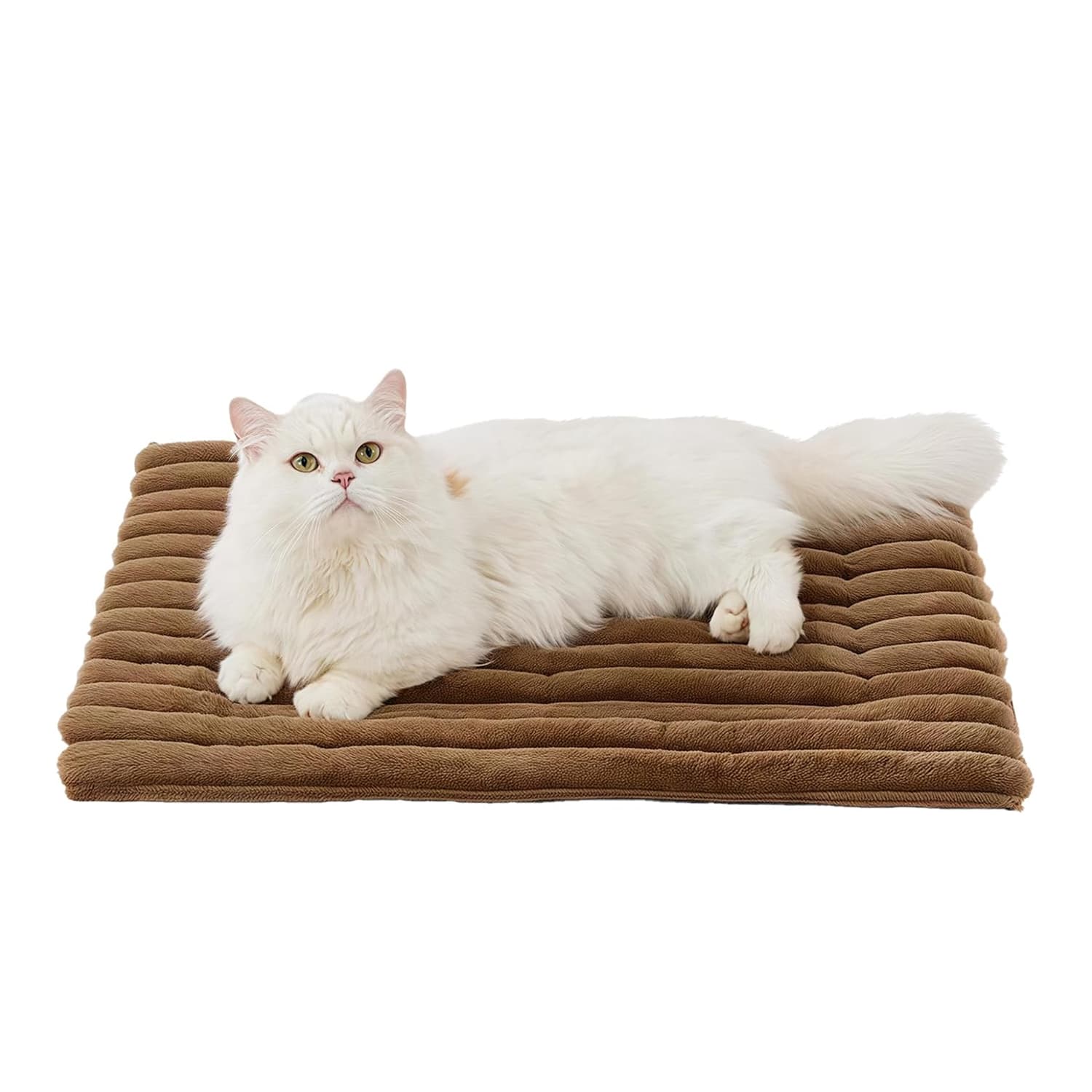
19-pound Maine Coon, basement alcove, no outlet down there. The L size is the only one I've owned that he can actually stretch out on instead of hanging off both ends. Six weeks in, two cover washes, no pilling, no seam issues. The dotted base stayed put even after he launched off it onto the dryer.
Frequently Asked Questions
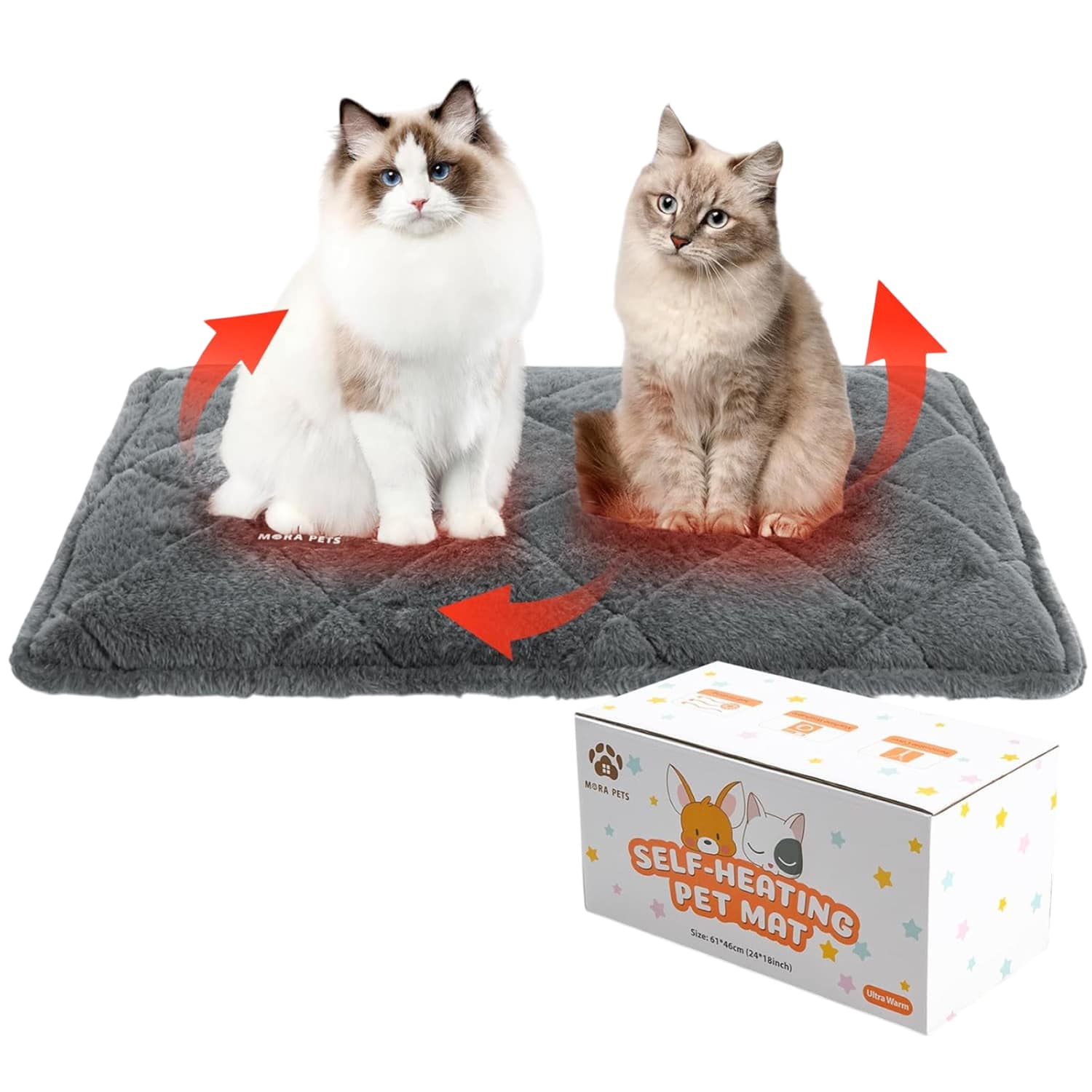
It does not generate heat — it reflects hers. The dual-foil core captures your cat's body heat as she lies on it and bounces it back through the fleece top. The bed stays cool until she gets on it, then ramps up over 10 to 15 minutes of contact.
This is the architectural choice that lets the bed run cordless. Electric pads generate heat actively; self-warming beds reflect it passively. Both work — they solve different problems.
No. The top layer is a noiseless thermal film, not the cheap Mylar that crinkles like a candy wrapper every time she moves. Anxious rescues and noise-sensitive seniors who refused first-generation Mylar mats actually settle on this one.
This is the single feature that separates the upgraded self-warming tier from the budget tier. If your cat refused a Mylar mat last winter, the noiseless film is what flips her decision.
Yes — that's the wedge. It works inside an insulated outdoor cat house, a Rubbermaid plus Styrofoam DIY shelter on top of straw, the woodshed, the mudroom, the carrier on a vet day, or the bay-window sill. No outlet means no geographic limit.
Important caveat: outdoor use means inside a properly insulated shelter with straw bedding as the primary insulator (alleycat.org standard), not exposed to weather.
The S/M (24 x 45.7 cm (18 inches)) fits cats up to 6.8 kg (15 pounds). The L/XL (29 x 45.7 cm (18 inches)) fits cats up to 11.3 kg (25 pounds), a Maine Coon, or two cats curled together. For a 19-pounder, go L or XL — he should be able to stretch out, not curl in a tight ball.
It's appropriate for adult cats and older kittens because there's no electricity, no cord to chew, no plug to spark, and no element that can overheat.
For neonate kittens under 4 weeks separated from mom, use vet-style incubator heating instead — small kittens cannot generate enough body heat to make a self-warming bed work.
Unzip the cover, take it off, machine-wash cold, air-dry or tumble low. The dual-foil thermal core stays out of the washer — wipe it down with a damp cloth if needed.
The seams hold up well past the 10-wash mark where cheap Mylar covers fail. Avoid hot wash and hot dryer settings; both can damage the reflective layer.
No. The dotted non-slip base grips hardwood, tile, vinyl, and smooth laminate. On carpet, the base doesn't grip the same way — but the bed itself is heavy enough at 0.5 kg (1.2 pounds) plus the thermal core that it doesn't bunch under a cat's weight.
Most senior cats find the warmth within a day or two, especially if you slip it under her favorite spot rather than placing it in a new room. The gentle warmth helps her stretch out instead of curling tight.
Important: warmth supports comfort but does not replace veterinary care for arthritis. Talk to your vet about the underlying condition; the bed makes daily life better.
Purchase and Delivery Process
The bed is sold exclusively online — no big-box retail markup, no middleman, direct from the brand to your door. Ordering takes about ninety seconds.
Important — the bed has been frequently out of stock since the first cold snap of the season. I personally had to wait two weeks before being able to order a replacement for our test sample because demand outran supply during the November cold snap. If it is showing in stock right now, that is the window to act.
Delivery moves fast once you're through the order page — most orders arrive within 4-6 business days. The 50% discount is currently active but is not guaranteed to stick around once stock pressure increases again.
Where Can I Buy WyldNook?

Getting your own WyldNook with a 50% discount is straightforward. Just follow these steps: